Why Two Rancho Cucamonga Homes With the Same Mello-Roos Bill Aren't the Same Deal
Picture two listings in Rancho Cucamonga, both new enough to still smell like paint, both showing a Community Facilities District charge of roughly $3,200 a year on the property tax estimate. A buyer comparing them side by side sees identical numbers and assumes the tradeoff is identical too. It isn't. One of those bonds might have eight years left before it disappears from the tax bill entirely. The other might have twenty-five. Same dollar figure, completely different financial commitment, and almost nobody asks the question that would reveal the difference before they write an offer.
That question, "how many years are left on this bond," matters more than the dollar amount printed on the tax estimate. Most buyers stop at the sticker number. The ones who ask about the payoff clock are the ones who actually understand what they're signing up for.
The charge shows up on San Bernardino County tax bills as a separate line under Community Facilities District, commonly called Mello-Roos after the 1982 state law that created the funding tool. Cities use it to pay off bonds for infrastructure that standard property tax revenue, capped by Proposition 13, wasn't enough to cover.
Rancho Cucamonga isn't guessing at this. The city publishes its own list of active districts, and the specificity is useful for anyone comparing neighborhoods:
| District | What it funds |
|---|---|
| CFD 2000-01 (South Etiwanda) | Street, sewer, water, storm drain, and landscaping bonds |
| CFD 2000-02 (Rancho Cucamonga Corporate Park) | Street improvements on Milliken Avenue, Arrow Route, and Foothill Boulevard |
| CFD 2000-03 (Rancho Summit) | Equestrian facilities, basketball courts, ball fields, and parkway maintenance |
| CFD 2001-01 | Street, storm drain, and water/sewer work near Victoria Gardens |
| CFD 2004-01 (Rancho Etiwanda Estates) | Park and equestrian facilities, streets, utilities, storm drain, school facilities, open space |
| CFD 2006-01 (Vintner's Grove) | Street, landscape, and utility improvements |
| CFD 2006-02 (Amador on Route 66) | Street, landscape, and utility improvements |
| CFD 2017-01 (North Etiwanda) | Ongoing landscaping and parkway maintenance |
That's a lot of infrastructure paid for by homeowners in specific tracts rather than the city at large. It also explains why the charge tracks so closely with where a home sits, not what it's worth.
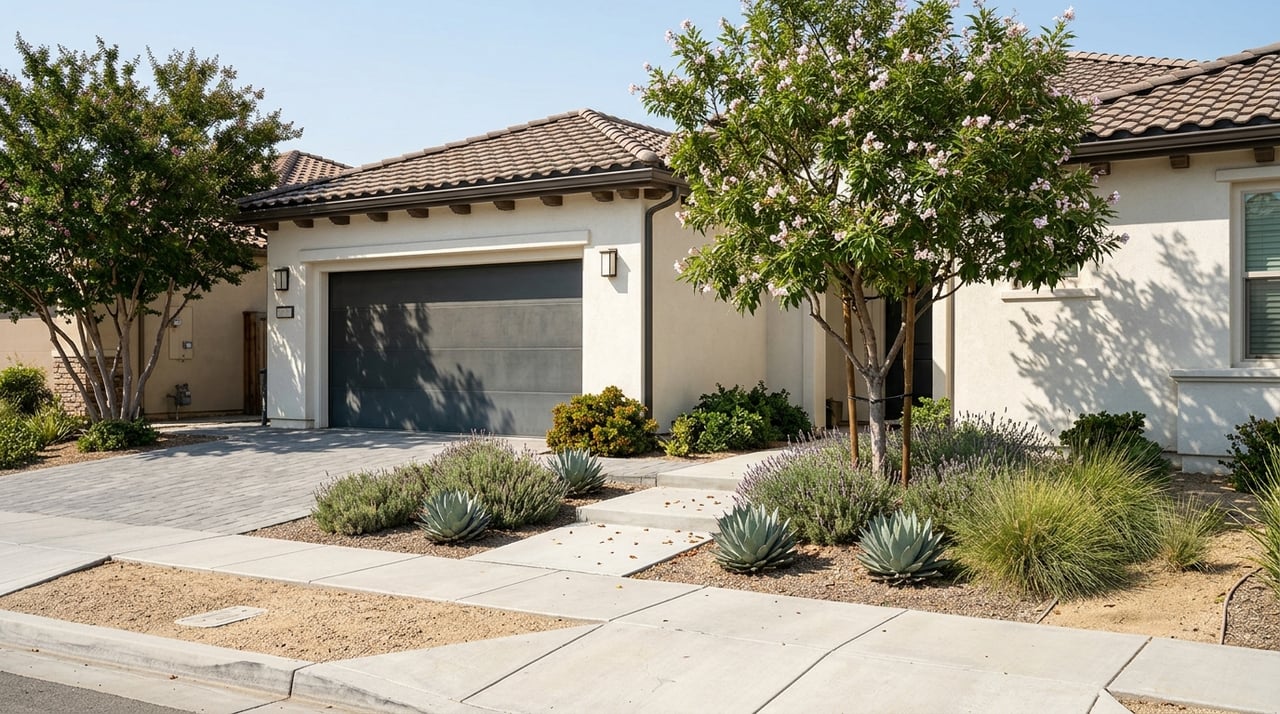
The pattern shows up consistently once you start comparing tracts. Newer development north of Foothill Boulevard near Day Creek, tracts close to Victoria Gardens, and pockets in the northeast corridor typically carry a CFD charge. Established areas in West Rancho Cucamonga near Haven Avenue, South RC, and the Terra Vista community generally don't, because that infrastructure was already in place before CFDs became the standard way to finance new subdivisions.
The practical effect: a home's base property tax rate in Rancho Cucamonga typically lands between 1.1% and 1.25% of assessed value. Add a Mello-Roos charge and the effective rate can climb to 1.5% to 1.8%. On a $900,000 purchase, that difference is the gap between roughly $9,900 and $16,200 a year in combined property tax and special tax, before insurance or HOA dues enter the picture.
This is why comparing a newer Etiwanda listing to an older West RC resale purely on list price misses the actual monthly cost. A buyer cross-shopping both needs the all-in number, not the headline price, to know which one truly fits the budget.
Here's the part that gets skipped in most conversations about Mello-Roos. The charge isn't permanent. It exists to retire a bond, and once the bond is paid off, the special tax comes off the property tax bill for good. Most of these bonds are structured to retire over a period of roughly two to four decades from the year the district formed.
That means a CFD charge of $3,200 a year with eight years remaining is a fundamentally different commitment than the same $3,200 with twenty-five years remaining. The first is a short-term cost that disappears while you likely still own the home. The second is a cost that will probably outlast your ownership and become the next buyer's problem to evaluate too, which affects resale.
There's a lending wrinkle worth knowing as well. A Mello-Roos charge doesn't shrink as a percentage of value the way base property tax effectively can over time. It's calculated according to a fixed formula set when the district formed, and lenders count it in your debt-to-income ratio the same way they count a mortgage payment or HOA dues. A $3,600 annual charge adds roughly $300 to your monthly qualifying number, whether the bond has three years left or thirty.
None of this means a CFD-funded home is a bad purchase. Many buyers in newer Rancho Cucamonga tracts specifically want the wider streets, updated infrastructure, and larger floor plans that came with that financing. The point is that "does this home have Mello-Roos" is an incomplete question. "How many years are left" is the one that actually tells you what you're agreeing to.
A few questions, asked in the right order, get you the real picture faster than guessing from the tax estimate alone.
Mello-Roos deductibility on your income taxes is genuinely complicated and depends on your specific CFD documents and overall tax situation, so that's a conversation for a qualified tax professional rather than something to assume either way.
Does Mello-Roos ever just go away on its own? Yes, once the underlying bond is fully repaid. The special tax is removed from the property tax bill at that point, which is why the years-remaining number matters so much more than most buyers realize.
Can I find out if a specific Rancho Cucamonga address has a CFD before I tour it? The San Bernardino County property tax bill lists any special assessments by parcel, and the City of Rancho Cucamonga's Special Districts page names the active CFDs and their general boundaries. Asking early saves you from falling for a home only to discover the real monthly number later in the process.
Is a home with Mello-Roos automatically a worse deal than one without it? Not automatically. It depends on the dollar amount, the years remaining on the bond, and what the district actually funded. A newer home with a short remaining term and meaningfully better infrastructure can still be the stronger long-term value than an older resale with no special tax but higher deferred maintenance.
The dollar figure on a tax estimate tells you almost nothing on its own. The years remaining, the district's purpose, and how that compares to the non-CFD alternative a few miles away tell you everything. That's the kind of detail that's easy to miss reading a listing sheet and much harder to miss with someone reading the actual disclosure documents alongside you.
If you're comparing homes across Rancho Cucamonga's Mello-Roos and non-Mello-Roos pockets, or you just found a district charge on a listing you like and want the real numbers before you write an offer, Team Andrade can help you get in touch for a free home valuation and personalized plan.
Navigating the journey of buying or selling a home can be a breeze when you've got the right expert by your side. We're here to simplify the process for you, tackling all your questions with honesty and dedication. Even if we don’t have an immediate answer, we promise to find it for you. Let's make your real estate experience smooth and stress-free together!

299 W FOOTHILL BLVD STE 212 UPLAND CA 91786 Yolanda Andrade | CA DRE# 01748163