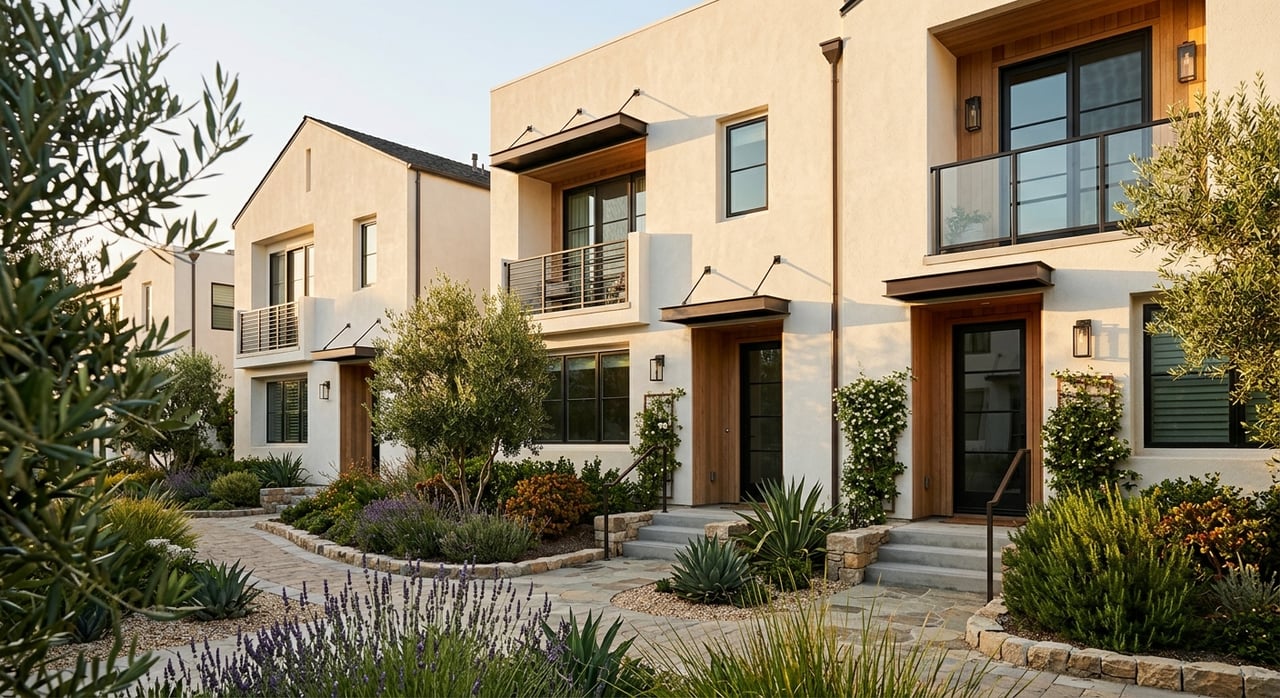
Is Townhome Living Right For You In Claremont?
Wondering whether a townhome in Claremont could be the right move for you? If you like the idea of lower exterior maintenance, a more central location, and a price point that may be more approachable than many detached homes, townhome living can be worth a serious look. The key is knowing what you are really buying, what the HOA covers, and how the location fits your daily routine. Let’s dive in.
Claremont offers a mix of housing types, including single-family homes, condominiums, townhouses, and apartments. The city profile and planning materials point to central Claremont, Village South, and the Foothill, Indian Hill, and Arrow corridors as some of the clearest areas where attached housing shows up.
That matters if you want to be closer to the Village, nearby restaurants, and a more walkable setting. Claremont’s Active Transportation Plan also shows the city is working toward a more walkable, bikeable, and transit-oriented future, which makes attached housing especially relevant in these central areas.
One reason buyers consider townhomes in Claremont is cost. As of July 2026, Redfin reported a Claremont median sale price of about $1.1 million over the prior three months, while current listings visible on Realtor.com showed condos roughly from $495,000 to $788,888 and townhomes roughly from $549,000 to $889,000.
That does not mean every townhome is a bargain, and it does not mean detached homes are always out of reach. It does suggest that attached homes can offer a lower entry point in Claremont than many single-family properties, especially if your goal is to stay in this market without stretching too far.
This is one of the most important things to understand before you buy. In California, a townhome is an architectural style, not a legal ownership type.
A property that looks like a townhome can be legally structured as a condominium or as a planned development. According to the California Department of Real Estate, that means you should not rely on the marketing label alone. You need to read the title documents and CC&Rs to understand exactly what you own and what the homeowners association manages.
In general, a condominium usually means you own your separate unit and share ownership of common areas. A planned development usually means you own a separate lot, parcel, area, or space, while the HOA manages common areas or easement rights.
For you as a buyer, that legal structure can affect maintenance responsibilities, insurance obligations, and how the community operates. Two homes may look nearly identical from the street but come with very different ownership details.
For many buyers, townhome living works well because it simplifies day-to-day ownership. Depending on the community, the HOA may handle some exterior upkeep, landscaping, and common-area maintenance, which can reduce the amount of work that falls directly on you.
That setup can be especially appealing if you travel often, want less yard work, or simply prefer a home that feels more manageable. In a city like Claremont, it can also help you live closer to central amenities without taking on the upkeep that often comes with a larger lot.
Townhome living may be a strong match if you:
If that sounds like your lifestyle, a townhome may check a lot of boxes.
Townhomes can offer convenience, but they also come with shared rules and shared financial responsibilities. When you buy in a common interest development, HOA membership is automatic.
The HOA’s governing documents, called CC&Rs, define important details like common areas, assessments, insurance obligations, and architectural controls. Associations also commonly regulate parking, balconies or decks, landscaping, pets, noise, and other day-to-day issues.
For some buyers, that structure feels helpful and predictable. For others, it can feel limiting, especially if you want more freedom to change the exterior, use outdoor space a certain way, or avoid ongoing association oversight.
Monthly dues are only part of the financial picture. According to the California Department of Real Estate, HOA assessments typically fund operating costs and long-term maintenance, and special assessments may be used for major repairs, replacements, or unexpected expenses such as insurance increases.
That means a lower-maintenance lifestyle can still come with financial risk if the association is underfunded. Before you buy, it is smart to look beyond the monthly dues and ask whether the association has healthy reserves and a stable budget.
Before you commit to a Claremont townhome, ask:
These questions can help you spot whether the monthly payment reflects a well-run community or whether bigger costs may be coming.
Every community is different, which is why the documents matter so much. A townhome may look perfect online, but the rules may shape how comfortable you feel once you live there.
Pay close attention to policies on:
California law requires disclosure of rental or leasing prohibitions in common interest developments. In Claremont, short-term rental rules are also strict. The city allows only hosted short-term rentals in a primary residence or eligible accessory structure, prohibits no-host vacation rentals, and requires notice to the HOA and directly abutting units for condo and townhome properties.
Claremont is still widely known for its single-family homes, and for some buyers, that remains the better fit. If you want a larger yard, more privacy, and fewer shared rules, a detached home may align better with your long-term goals.
On the other hand, if you care more about location, lower exterior maintenance, and a community setting, a townhome may offer a practical balance. The right answer depends less on the label and more on how you want to live.
| Feature | Townhome | Single-Family Home |
|---|---|---|
| Maintenance | Often reduced through HOA coverage | Usually more direct owner responsibility |
| Rules | HOA rules typically apply | Fewer shared community rules in many cases |
| Outdoor space | Often smaller private space | Often more yard space |
| Location | Common in central attached-housing areas | Found broadly across Claremont |
| Costs | May have lower purchase price plus HOA dues | Often higher purchase price, fewer shared dues |
This is a general comparison, not a rule for every property. The legal structure and governing documents always matter.
California transfer disclosure rules require a seller of a separate interest in a common interest development to provide key documents and financial materials. These can include governing documents, budget information, assessment details, unresolved violation notices, rental restrictions if applicable, and recent board minutes.
This review stage is where many of the most important answers live. If you are considering a townhome in Claremont, make time to read the CC&Rs carefully and understand the association’s finances before you move forward.
A townhome in Claremont can be a great fit if you want a more manageable home, a central location, and a possible lower price point than many detached options. It can be especially appealing near Village South and other attached-housing corridors where proximity and convenience are part of the lifestyle.
At the same time, townhome living works best when you are comfortable with HOA rules, monthly dues, and shared decision-making around maintenance and community standards. The best choice comes down to your budget, your routine, and the documents behind the property, not just the photos or the listing description.
If you want help comparing a Claremont townhome to other local options, Cornerstone Realty Group can help you sort through the details and build a personalized plan.
Navigating the journey of buying or selling a home can be a breeze when you've got the right expert by your side. We're here to simplify the process for you, tackling all your questions with honesty and dedication. Even if we don’t have an immediate answer, we promise to find it for you. Let's make your real estate experience smooth and stress-free together!
299 W FOOTHILL BLVD STE 212 UPLAND CA 91786 Yolanda Andrade | CA DRE# 01748163