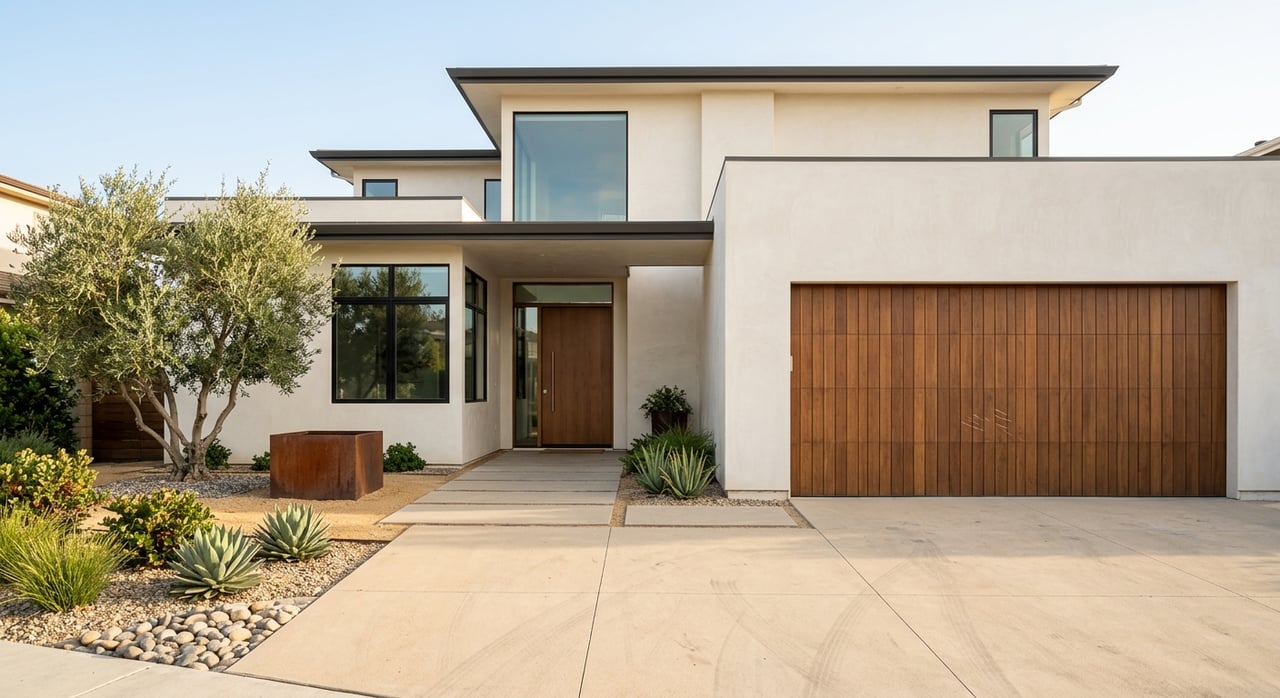
Relocating to Rancho Cucamonga From Los Angeles: What to Know
Thinking about trading Los Angeles traffic, density, and pricing for more space in the Inland Empire? If Rancho Cucamonga is on your shortlist, the move can make a lot of sense, but it helps to go in with clear expectations. You may find more detached homes and a different daily rhythm, but your commute, housing options, and even rental costs may not shift the way you expect. Let’s dive in.
Rancho Cucamonga offers a very different scale from Los Angeles. Census estimates put Rancho at 174,453 residents in 2020 and 177,856 in 2025, compared with 3,898,747 in Los Angeles. That smaller scale often translates to a more suburban feel, with more room between homes and a less dense street pattern.
The housing mix also points to a different lifestyle. Rancho Cucamonga has a 62.3% owner-occupied housing rate, while Los Angeles sits at 36.0%. Average household size is also a bit larger in Rancho, at 2.93 people versus 2.61 in Los Angeles, which reflects a market where many buyers are looking for longer-term homeownership.
For many buyers, the biggest reason to relocate is simple: buying in Rancho Cucamonga is generally more affordable than buying in Los Angeles. Zillow’s April 30, 2026 data shows a median sale price of $764,259 in Rancho Cucamonga, compared with $1,004,250 in Los Angeles. Census figures also show a lower median owner-occupied value in Rancho at $740,200 versus $921,200 in Los Angeles.
Monthly ownership costs also trend lower. Census data shows median monthly owner costs with a mortgage at $2,947 in Rancho Cucamonga and $3,497 in Los Angeles. That does not mean every home will be cheaper, but it does mean many relocating buyers can often shop in a different price range than they could in Los Angeles.
If you want a detached home, Rancho Cucamonga gives you more of that inventory. The city’s adopted housing element shows that 68.7% of the housing stock is single-family, and single-family detached homes alone make up 62.5% of units. Multi-family housing accounts for 28.7%, with attached options making up a smaller but meaningful share.
That matters because your search can look very different depending on your goals. If you are moving from a condo or smaller lot in Los Angeles, Rancho may open the door to more detached homes and larger lots. In some very-low-density areas, detached homes can sit on minimum lots of 20,000 square feet, while low-density areas allow detached homes on 7,200-square-foot minimum lots.
If you want to keep your payment lower or preserve cash after your move, attached housing can be a smart option. Redfin shows median listing prices of about $599K for townhouses and $535K for condos in Rancho Cucamonga. Those price points can matter if you want flexibility for closing costs, repairs, or future upgrades.
This can be especially helpful if you are relocating and trying to avoid being house-rich and cash-poor. A condo or townhome may offer a more comfortable landing spot while you get used to the area. It can also help if you are balancing a sale in Los Angeles with a purchase in Rancho.
One of the biggest myths about moving inland is that everything gets easier just because you moved farther east. In reality, commute times do not automatically improve. Census data shows a mean travel time to work of 32.3 minutes in Rancho Cucamonga, compared with 30.7 minutes in Los Angeles.
That does not mean Rancho is harder to navigate. It means your real experience depends on where you work, when you leave, and how you plan to travel. If you are keeping a Los Angeles job, you should test the trip at the times you would actually commute.
Rancho Cucamonga is strongly connected by freeway corridors. According to the city’s PlanRC mobility chapter, State Route 210 and Interstate 15 serve the city directly, and Interstate 10 sits about 0.7 miles south of the city limit. That gives you strong regional access across the Inland Empire and toward the Los Angeles basin.
If you drive most days, that network can be a major advantage. But freeway access is not the same thing as a short or stress-free commute. The route that looks simple on a map may feel very different during a weekday morning or evening drive.
If you prefer rail for part of your commute, Rancho Cucamonga does offer an option. The Rancho Cucamonga Metrolink station serves the San Bernardino Line and includes 960 permit-parking spaces. The station also connects to Omnitrans and ONT Connect shuttle service to Ontario International Airport.
For some buyers, that can be a strong part of the relocation equation. Still, transit works best when your schedule, station access, and final destination all line up. Rancho is not transit-free, but it is still a city where many daily routines center on driving.
Los Angeles buyers sometimes assume every part of Rancho Cucamonga will feel less walkable than their current neighborhood, and sometimes that is true. The city reports that sidewalks exist on about 76% of city streets, but there are still gaps in the northwest, southwest, south, and eastern portions of the city. Connectivity improvements are still a work in progress in some areas, including north of SR-210 and in the southeast.
That means your day-to-day experience can vary a lot by location. Some parts of the city may feel more connected and convenient, while others may require more driving for everyday errands. If walkability matters to you, it is smart to evaluate specific areas instead of making assumptions about the city as a whole.
A move from Los Angeles to Rancho Cucamonga is not just about square footage. It is also about a different pace and pattern of living. Rancho’s planning materials emphasize a mix of housing, recreation, arts and culture, entertainment, and employment opportunities, with a focus on accessibility and people-first design.
You will also see a strong park and public-space network. The city budget reports more than 30 parks, and Central Park is described by the city as a 30-acre community facility with recreational and gathering spaces. City event programming also points to a steady lineup of activities at parks and libraries.
One of the city’s most visible commercial anchors is Victoria Gardens. The city notes that the Victoria Gardens Shopping Center has an on-site police substation serving the stores, restaurants, and nearby businesses. For many relocating households, it is one of the clearest examples of Rancho Cucamonga’s retail and service concentration.
This matters because lifestyle convenience often comes down to where you spend your time. If you want easy access to shopping, dining, and services, location within the city can shape your experience just as much as the home itself. That is especially true in a city where some areas are more auto-oriented than others.
Some Los Angeles movers assume renting in Rancho Cucamonga will offer a cheaper way to test the market first. The numbers do not always support that. Zillow reports average rent of $2,809 in Rancho Cucamonga and $2,650 in Los Angeles, so rent is slightly higher in Rancho on that measure.
That does not mean renting is a bad idea. It just means renting first should be a lifestyle and timing decision, not an automatic money-saving move. If you need time to learn the area, explore commute options, or coordinate a sale, renting can still be useful.
If you are relocating from Los Angeles, the smartest move is to compare more than just list price. Rancho Cucamonga has meaningful differences in housing type, lot size, walkability, and commute setup depending on where you look. A home that seems perfect online may fit very differently once you test the daily routine.
Before you move forward, focus on a few practical checks:
Even though prices are lower than Los Angeles, Rancho Cucamonga is not a slow market. Redfin says homes in Rancho receive about 3 offers on average and sell in around 41 days. Los Angeles also averages about 3 offers, but with a longer selling period of roughly 48 days.
Zillow’s Rancho snapshot shows a median sale-to-list ratio of 0.999 and a median list price of $797,167 as of May 31, 2026. In plain terms, buyers should be prepared for a competitive environment where well-priced homes can still move efficiently. If you are relocating, it helps to be financially and logistically ready before the right home appears.
Relocating to Rancho Cucamonga from Los Angeles can create real opportunities, especially if you want more detached-home options, different price points, and a more suburban layout. At the same time, the move works best when you look closely at commute reality, housing type, and how you want your daily routine to feel. The right move is not just about getting farther east. It is about finding the version of home and lifestyle that actually fits you.
If you are planning a move and want clear, local guidance, Cornerstone Realty Group can help you compare options, understand the market, and build a personalized plan.

Navigating the journey of buying or selling a home can be a breeze when you've got the right expert by your side. We're here to simplify the process for you, tackling all your questions with honesty and dedication. Even if we don’t have an immediate answer, we promise to find it for you. Let's make your real estate experience smooth and stress-free together!

299 W FOOTHILL BLVD STE 212 UPLAND CA 91786 Yolanda Andrade | CA DRE# 01748163