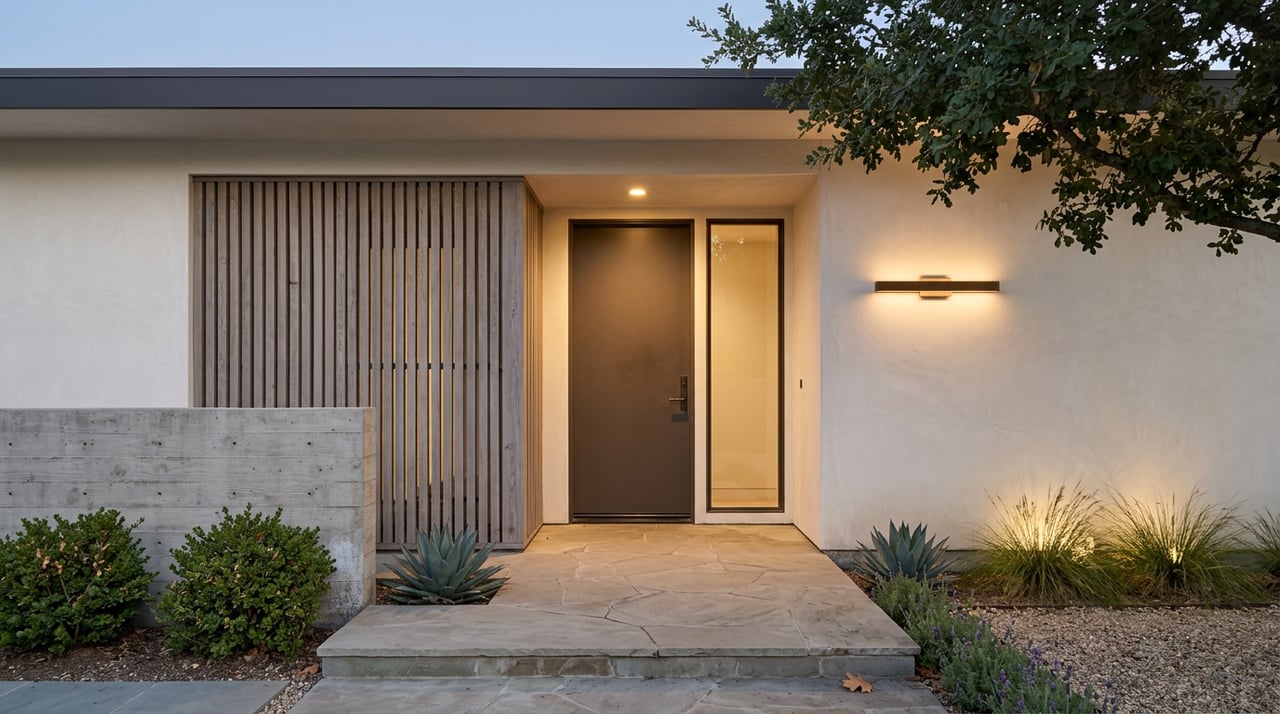
Why La Verne's Home Prices Split Right Down Foothill Boulevard
A buyer we know found two homes in La Verne this spring, both listed within $10,000 of each other, both roughly the same square footage and vintage. One closed in three weeks. The other sat for six because the lender was waiting on a wildfire insurance binder that took the carrier that long to underwrite. Same city. Same zip code. Different address relative to one street: Foothill Boulevard.
That gap is the part the citywide median never shows you. As of mid-2026, La Verne's headline home value sits somewhere between $940,000 and $997,000 depending on which index you check, and depending on the month it either looks flat or down double digits year over year. Both readings can be true at once, because La Verne isn't really one housing market. It's two, split by a boulevard, and each side is now moving on a different set of forces.
Roughly four out of five properties in La Verne carry some level of wildfire risk over the coming decades, and the 2024 Bridge Fire, which burned past 55,000 acres in the hills north of the city, changed how insurance carriers price and underwrite the foothill pockets specifically. That's not a lifestyle detail. It's an underwriting input that determines which homes finance on a normal timeline and which need a surplus lines carrier and a longer wait.
In practice, two homes with nearly identical list prices can clear escrow at very different speeds depending on which side of Foothill Boulevard they sit on. A buyer targeting the gated foothill communities should plan for a longer insurance shopping window than a buyer looking at a home in the flatter, older part of town, and that premium needs to be in the offer from the start. Finding it out during your contingency period is the expensive way to learn it.
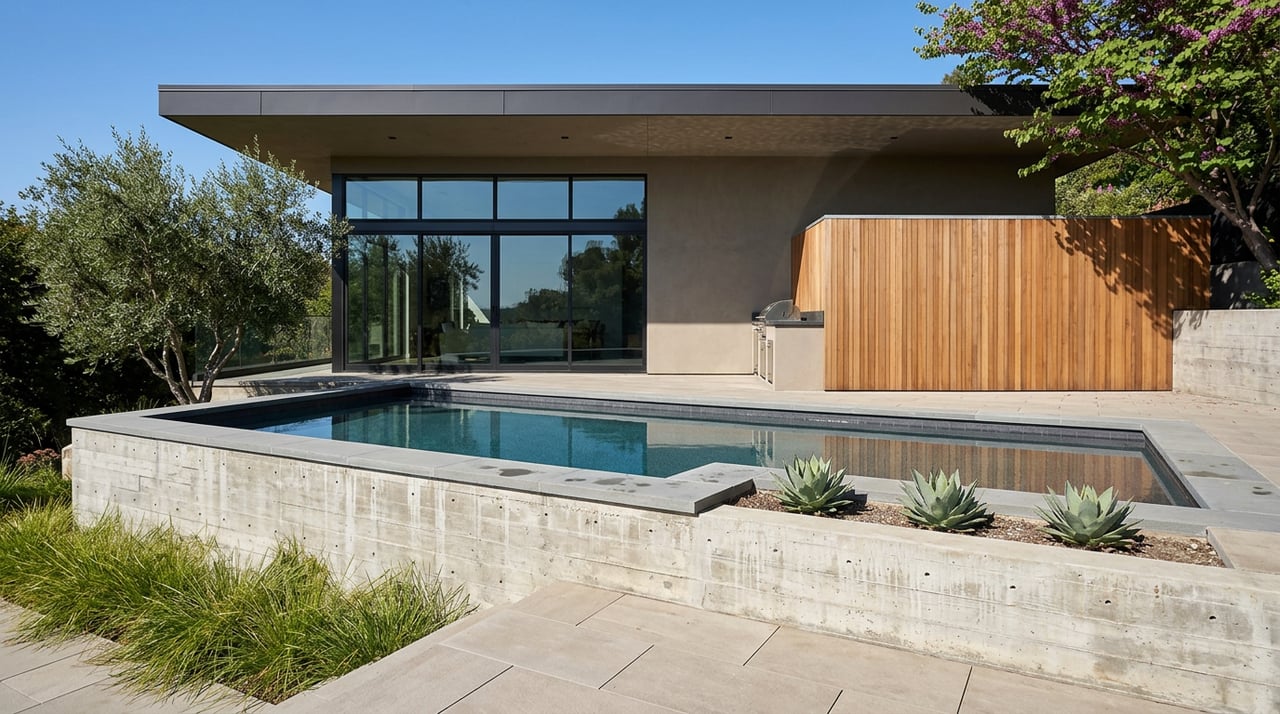
North of Foothill is what local agents call the foothill product: larger lots, newer construction, more gated developments, more custom builds. This is where you find Marshall Canyon Estates, a guard-gated community, and Live Oak Canyon, known for its oak tree canopy. The amenities up here are real, not marketing copy. Marshall Canyon Regional Park covers 120 acres with a trail system, camping, and equestrian access, and it sits alongside Marshall Canyon Golf Course and Sierra La Verne Country Club. One longtime local described the canyon setting as "very unique for the area," and the price tags reflect that scarcity.
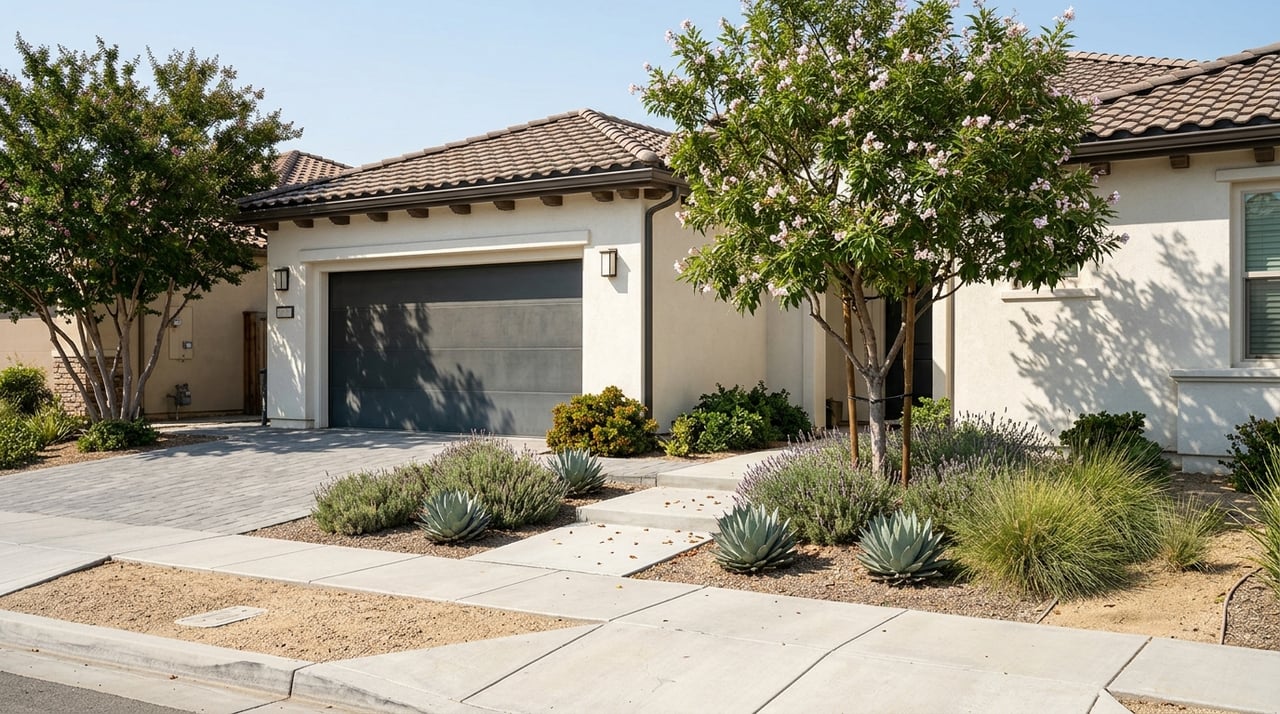
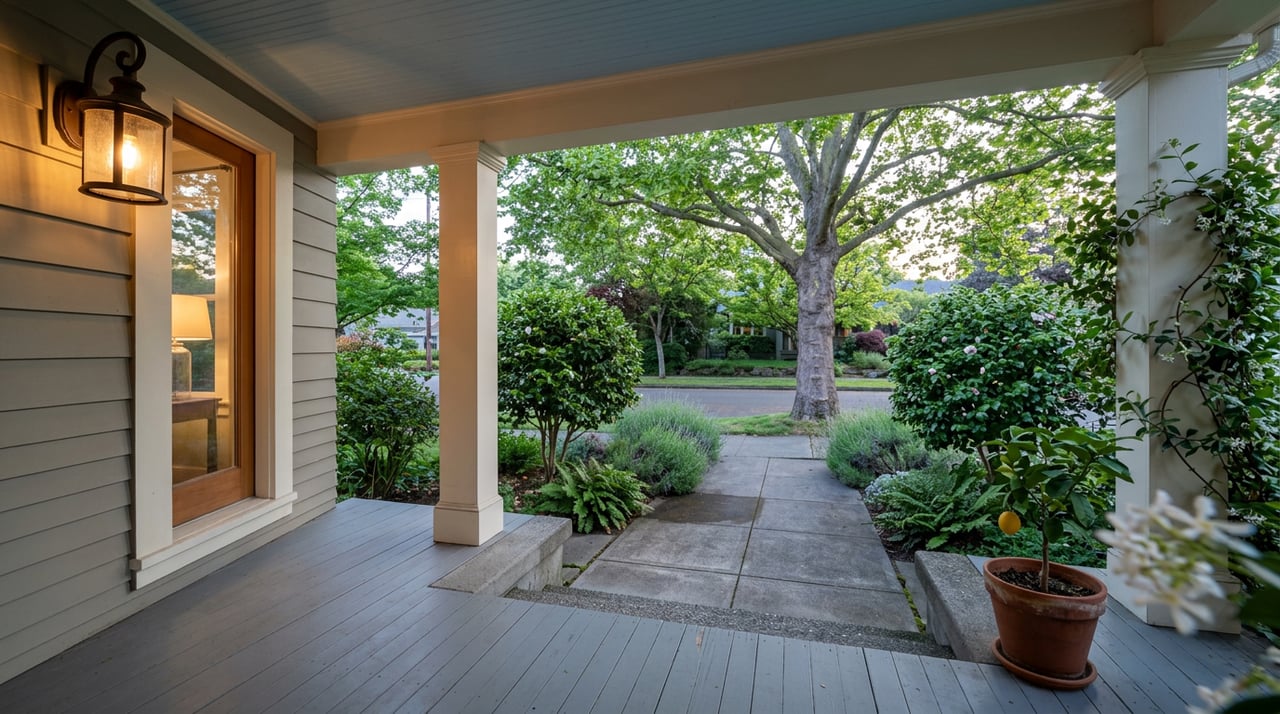
South of Foothill is legacy product. Smaller lots, older bones, walkable streets. Bungalows built in the 1930s sit next to postwar homes and later infill within walking distance of Old Town La Verne's village core, the University of La Verne campus, and Damien High School, with easy access to the LA County Fairplex. Buyers here are typically paying for character, walkability, and land, not for a modern floor plan.
The spread between these pockets is wide enough to make a citywide average close to meaningless. As of mid-2026, homes on the northern foothill edge have been priced from around $800,000 up to $2.2 million, with active listings running from roughly $900,000 to well over $1.8 million. On the other end of town, in the same city and the same year, closed sales for condos and smaller footprints have landed in the $340,000 to $430,000 range. That is not two different cities. It is one city with a fault line running through the middle of it.
None of that means one pocket is winning and the other is losing. It means the transaction count in any single pocket is small enough that one closing can swing the whole read. A single custom estate selling in Live Oak Canyon pulls the north pocket's average up. A cluster of Old Town bungalow sales pulls the south pocket down. The citywide number smooths all of that into a single figure that describes neither pocket accurately. If you're comparing La Verne to anywhere else, or comparing one part of La Verne to another, the pocket is the unit of analysis, not the city.
There's a second force at work on the south side of Foothill, and it's newer than any of the pricing data above. The La Verne/Fairplex Metro A Line station opened for passenger service on September 19, 2025, sitting north of Arrow Highway between the University of La Verne campus and the Pomona Fairplex, with a 300-space park-and-ride lot that includes EV charging. A rider boarding there reaches Pasadena in about 32 minutes and downtown Los Angeles in roughly 62. The station's public art, called "Connectivity" and created by local artist Blue McRight, uses a zig-zag orchard ladder motif to nod at the city's citrus and water history, which is a small detail but the kind that tells you the city treated this stop as more than infrastructure.
That station sits on the walkable side of Foothill Boulevard, closer to Old Town and the university-area bungalow pocket than to the gated foothill communities. Local market analysts have flagged that proximity to a working rail stop hasn't fully shown up in comparable sales yet for that part of town. If you're weighing an Old Town bungalow against a similarly priced home in Claremont Village, it's worth knowing that Claremont's own station on this same line isn't scheduled to open until the Pomona-to-Montclair segment is complete, a date currently projected for June 2031. Right now, La Verne has a working stop and Claremont does not. That's a real variable, and it's one an appraiser or a buyer should be pricing in on purpose rather than discovering later in a comp set.
If you're using La Verne's headline price to plan a purchase or a sale, a few adjustments make that number useful instead of misleading.
Is La Verne a buyer's market or a seller's market right now? Citywide inventory sat at roughly three months of supply as of June 2026, which reads as close to balanced with a slight lean toward sellers. But that single number hides real variation. The entry-level Foothill Corridor segment was showing a median 76 days on market as of August 2026, which behaves more like a patient market than a hot one.
Does the new Metro station change what I should pay for a home? Not officially, not yet. Appraisals tend to lag behind infrastructure changes by a year or more. But if you're choosing between two similarly priced homes and one is a walk from the La Verne/Fairplex station, that's a real amenity even though it isn't reflected in the comps in front of you today.
How much extra should I budget for insurance if I'm buying north of Foothill? There's no single number that applies to every address. It depends on the carrier, the roof material, and how much defensible space surrounds the home. The point isn't the exact premium, it's getting that quote in hand before you write the offer instead of after.
La Verne's price story only makes sense once you stop asking what the city is worth and start asking what your specific pocket is worth, this month, on this side of Foothill Boulevard. If you're weighing a move here, or trying to figure out what your current La Verne home is actually worth in today's split market, Cornerstone Realty Group can walk the comps pocket by pocket with you and put together a plan built around your address, not the citywide average. Reach out for a free home valuation and a personalized plan.

Navigating the journey of buying or selling a home can be a breeze when you've got the right expert by your side. We're here to simplify the process for you, tackling all your questions with honesty and dedication. Even if we don’t have an immediate answer, we promise to find it for you. Let's make your real estate experience smooth and stress-free together!
299 W FOOTHILL BLVD STE 212 UPLAND CA 91786 Yolanda Andrade | CA DRE# 01748163