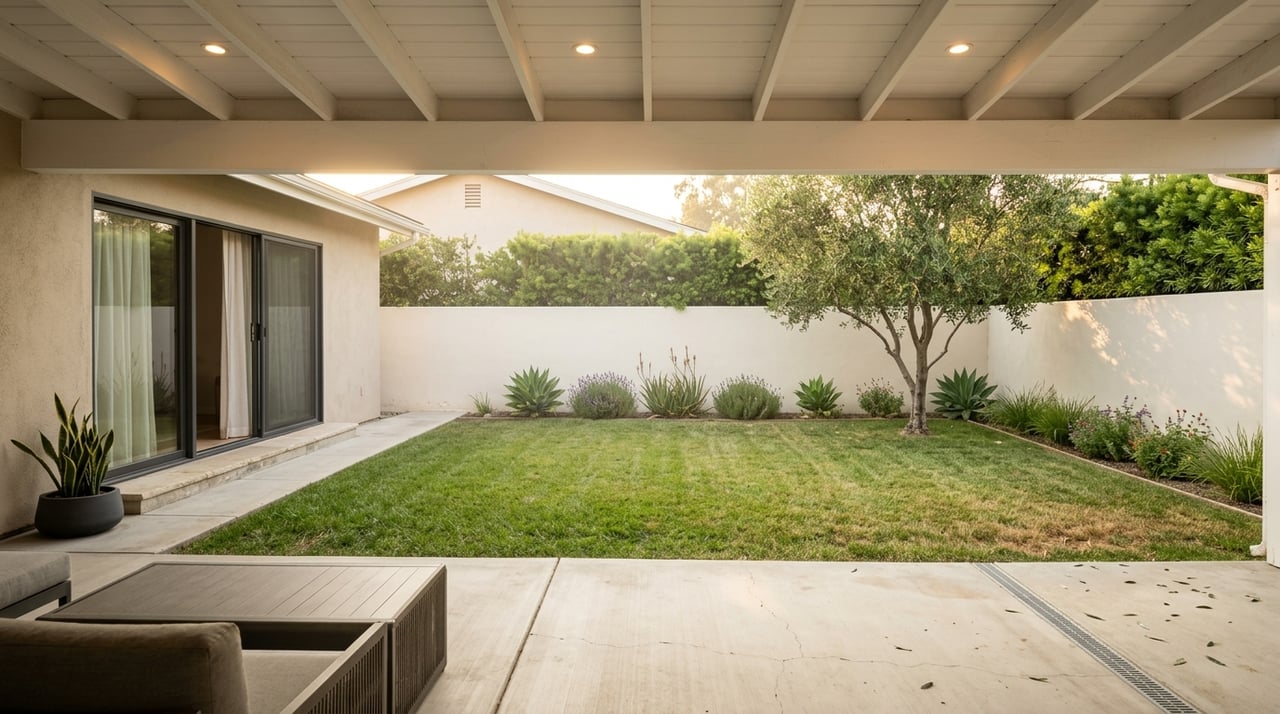
La Verne Family Neighborhoods for Your Next Move
Looking for a place where everyday family life feels a little easier? In La Verne, many buyers are drawn to the mix of parks, school options, community spaces, and neighborhood variety that can support a long-term move. If you are trying to narrow down where to focus your search, this guide will help you understand which La Verne pockets stand out for parks, school proximity, and day-to-day convenience. Let’s dive in.
La Verne has many of the features buyers often look for when planning a long-term home purchase. The city describes itself as a close-knit community with small-town character, and it also points to about 110 acres of parks, a broad range of municipal services, and strong transportation access.
The numbers help support that picture. Census QuickFacts shows a 67.1% owner-occupied housing rate, about 19.4% of residents under 18, and an average household size of 2.62. Together, those figures suggest a community with a meaningful family presence and a strong base of homeowners.
For many buyers, school access is one of the first things they want to understand. Bonita Unified School District serves La Verne and San Dimas and includes eight elementary schools, two middle schools, and three high schools.
Just as important, attendance is address-specific. The district provides a school locator and boundary map, so it is smart to verify school assignment for any home you are considering before you move forward.
Within La Verne, several local elementary schools often come up in family home searches:
Grace Miller Elementary also received recognition as a 2023 National Blue Ribbon School for Academic Excellence. That may be a useful point of interest for buyers comparing address locations within the city.
One reason La Verne stands out is that family recreation is not limited to a few scattered green spaces. The city says its park system totals about 110 acres and includes a sports park facility at Bonita High School that is open for public use, an aquatics center at Las Flores Park, and access to Frank G. Bonelli Regional Park within one mile of La Verne.
That matters because parks often influence how a neighborhood feels from week to week. In La Verne, the park network supports everything from casual playground time to organized sports and seasonal routines.
Notable family-oriented parks and recreation spaces include:
Several of these spaces are tied to schools through joint-use agreements. That creates the kind of everyday layout many buyers value, where school, play space, and recreation can be closely connected.
For some households, a neighborhood works best when activities are built into the local routine. La Verne supports a broad youth-sports ecosystem through city-recognized programs, including AYSO for ages 5 to 18, Little League baseball for ages 5 to 14, girls’ softball for ages 6 to 14, Pop Warner for ages 7 to 15, and a competitive soccer club for ages 9 to 17.
That adds another layer to the home search. Instead of only asking how close a home is to a park, you may also want to think about practice fields, game-day schedules, and whether organized recreation is likely to become part of your weekly calendar.
La Verne is best understood as a collection of recognizable pockets rather than a strict neighborhood ranking. The city’s planning framework includes named specific-plan areas such as Old Town La Verne, La Verne Heights, Rancho La Verne, Sierra La Verne, Puddingstone, and Foothill Boulevard.
For buyers, that means it helps to think in terms of lifestyle fit. Some areas feel more central and activity-rich, while others may offer a more open-space setting or stronger school-and-park adjacency.
Old Town La Verne is the city’s historic and civic core. According to the city, it dates to 1887 and includes a mix of single-family and multifamily housing, along with specialty shops, restaurants, recurring events, and a daytime population of about 7,500 university students.
If you want a neighborhood feel with more activity nearby, Old Town may be worth a closer look. It can be a strong fit for buyers who prefer a more central setting instead of a purely subdivision-style environment.
The Oak Mesa area stands out for its school-and-park connection. Oak Mesa Park sits next to Oak Mesa School and includes playgrounds, lighted soccer fields, baseball fields, and a recreation center.
This kind of layout can be appealing if you want daily convenience built into the neighborhood pattern. Having school and recreation uses close together often supports smoother weekday routines and active weekends.
Another practical pocket for family buyers is the area around Grace Miller Elementary and Kirk B. Johnson Memorial-Pelota Park. The park is adjacent to the school and includes three lit baseball and softball fields.
For buyers who want nearby play space and organized sports access, this area is a useful example of how La Verne’s family-oriented land use works on the ground. It reflects the city’s larger pattern of linking schools and recreation spaces.
Sierra La Verne offers a different feel from the more central parts of the city. The city notes that the former Sierra La Verne Country Club site has an open-space designation, is private property, and lies within a Hillside Development Overlay Zone.
That means buyers may need to weigh different priorities here, including terrain, privacy, and wildfire-related constraints. The city also notes that accessory dwelling units are not permitted in that overlay area because of very high fire-zone concerns.
If you are comparing homes in La Verne, it helps to focus on the routines you want your household to support. A home near a park may matter more if weekends revolve around sports and outdoor time, while a more central location may feel better if you want events, dining, and walkable activity nearby.
A few smart questions to ask during your search include:
These questions can help you compare neighborhoods in a more practical way. Instead of searching for a single “best” area, you can focus on the part of La Verne that best matches your household’s daily rhythm.
La Verne has a lot to offer, but the best fit depends on how you live. Some buyers want proximity to elementary schools and sports fields, while others care more about community events, dining, and a central location.
It is also important to remember that school boundaries are address-specific, not citywide. Verifying attendance zones early can save time and help you avoid disappointment later in the process.
If you are planning a move in La Verne, a neighborhood-level strategy can make your search much more efficient. It helps you narrow the map based on what matters most to you rather than trying to sort through every listing the same way.
If you want help comparing La Verne neighborhoods, planning your next move, or preparing to sell and buy on the same timeline, Cornerstone Realty Group is here to offer local guidance, a personalized plan, and a free home valuation.

Navigating the journey of buying or selling a home can be a breeze when you've got the right expert by your side. We're here to simplify the process for you, tackling all your questions with honesty and dedication. Even if we don’t have an immediate answer, we promise to find it for you. Let's make your real estate experience smooth and stress-free together!
299 W FOOTHILL BLVD STE 212 UPLAND CA 91786 Yolanda Andrade | CA DRE# 01748163