The Six-House Limit Behind Claremont's Mills Act Tax Break
In September 2026, the Claremont Architectural and Preservation Commission looked at a Colonial Revival house on Via Zurita Street and did the math out loud: roughly $63,000 in property tax savings over ten years if the city signs off on a Mills Act contract. Four months earlier, at the same table, commissioners had told staff to stop letting anyone advertise that kind of number as a sure thing.
Both things are true. The tax mechanism is real and can be substantial. It is also capped, competitive, and increasingly hedged by the people who administer it. If you're buying or selling a home on the Claremont Register this year, the gap between those two facts is the part worth understanding before you write or accept an offer.
Claremont's Mills Act program isn't new. The city set it up in 2000 and revised it in 2009 and again in 2012, and the current rules sit in City Council Resolution 2012-75. What matters more than the paperwork's age is a limit buried inside it: the city council approves no more than six new Mills Act contracts in any calendar year, and every applicant has to clear five separate criteria to get one of those slots.
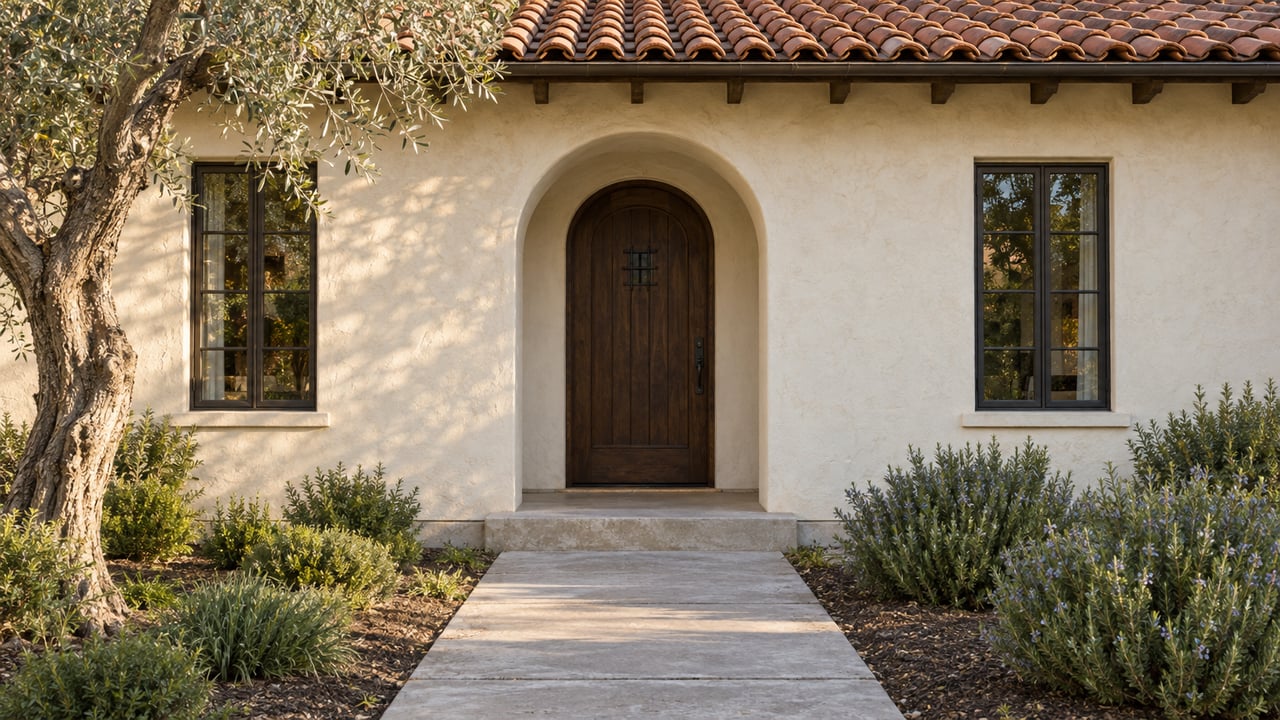
Six a year sounds generous until you look at the pool competing for it. Claremont's historic register, formally the Register of Structures of Historic or Architectural Merit, runs to roughly 1,150 properties, spread across four historic districts, the oldest dating to 1971 and among the earliest in Los Angeles County. Recent council agendas show the six spots filling with specific, named houses: 611 West Eighth Street, 424 Harrison Avenue, 1111 North Indian Hill Boulevard, and 425 West Tenth Street all moved through contracts in the past year, alongside a separate register listing at 1230 Harvard Avenue. A house that qualifies for the register doesn't automatically get a Mills Act contract in the same cycle. It gets in line.
That line matters for timing a purchase. A buyer who assumes the tax break is available the moment they close escrow is assuming a benefit the city hasn't necessarily agreed to grant yet. The application, the criteria review, and the six-a-year ceiling all happen on the city's calendar, not the buyer's.
For houses that do get a contract, the mechanics work differently from ordinary Proposition 13 assessments. Instead of valuing the home by market comparables, the Los Angeles County Assessor uses an income approach: what the property could reasonably be expected to rent for, minus allowable operating expenses, divided by a capitalization rate set under state law. The assessor then compares that restricted value against the property's market value and its factored Prop 13 base year value, and enrolls whichever of the three is lowest. That's the number the Via Zurita staff report was projecting forward across a decade to land on $63,000.
The contract itself runs for a minimum of ten years and renews automatically each year, creating what amounts to a rolling term that never gets shorter unless the owner or the city moves to end it. When the house sells, the contract doesn't reset. It's recorded against the property and transfers with title, which means a buyer inherits the seller's restricted assessed value rather than being reassessed at the new purchase price. In a market where recent sale prices routinely exceed a Mills Act house's assessed value by a wide margin, that inherited number can be the difference between a tax bill that tracks the sale price and one that doesn't.
This is where the May 2026 meeting matters. At that session, commissioners pressed staff to clarify how the Mills Act should be described publicly and asked that the city stop letting fee waivers or other financial benefits be advertised as guaranteed. Staff's own position was that the tax relief and related benefits exist, but they're limited, and the commission wanted clearer guidance on who typically qualifies before that language gets repeated in listings or marketing.
Read against the September case, the sequence says something specific: the city is comfortable putting a dollar figure on an individual, approved contract, but not comfortable with that figure being generalized into a promise attached to any old house on the register. A property doesn't get $63,000 in savings because it's historic. It gets that number, or something like it, because it cleared five criteria, won one of six annual slots, and had an assessor run the actual income-approach math for that specific address. The number is earned case by case, not inherited by category.
For anyone shopping register properties, that distinction changes what a listing claim is worth. A description that cites Mills Act savings without a recorded contract number attached to that exact address is describing a possibility, not a fact in evidence.
A few things are worth confirming before you get attached to the tax number:
Ask whether the Mills Act contract is already recorded and active, not just eligible. An unregistered house, even one on the Claremont Register, has no contract to inherit until the city approves one, and that approval is capped at six a year.
Ask for the current assessed value directly from the county, not an estimate from a listing sheet. The recorded value is public and it's the actual figure that carries forward at sale.
Ask what restoration or maintenance obligations remain on the contract's work plan. The tax reduction comes with a maintenance commitment attached to the property, and unfinished obligations transfer along with the savings.
Ask about any exterior alterations made without the required approvals. Historic properties carry disclosure expectations that go beyond a standard transfer disclosure statement, and unpermitted work on a register house is a bigger complication than the same work would be on a non-historic property.
None of this makes a Mills Act house a harder buy. It makes it a buy where the paperwork does more work than the listing photos, which is exactly the kind of transaction where having someone read the contract before you write the offer pays for itself.
An active, well-documented Mills Act contract is a legitimate selling point and belongs in the pricing conversation, not buried in a disclosure packet. Buyers who understand the ongoing savings often value a documented contract more than a comparable house without one. The seller's job is to make that case with the paper trail: the recorded contract, the current assessed value from the county, and a clean record of annual compliance. A gap in that record is worth closing before the house goes on the market, not after a buyer's agent finds it during escrow.
Does the tax savings show up as a guaranteed dollar amount before I close? No. The number city staff cite, like the roughly $63,000 estimate for Via Zurita Street, is a projection tied to that specific property's contract and the assessor's income-approach calculation. It's a real estimate for a real contract, but it isn't a fixed rebate you can bank on before the county finalizes the assessment.
If I buy a house that's on the register but doesn't have a Mills Act contract yet, can I apply for one myself? Yes, but you're applying into the same six-a-year limit as anyone else, and the five qualifying criteria still have to be met. Being on the register is a prerequisite, not an approval.
A Mills Act contract can be one of the more useful pieces of paper attached to an older Claremont house, and it can also be one of the easiest things to overstate. The houses in this piece, from Eighth Street to Via Zurita, show what the benefit actually looks like when the city puts a real number next to a real address. That's the version worth asking for.
If you're weighing a purchase or sale involving a Claremont Register property, or sorting out how a Mills Act contract fits into an inherited or trust-held home, Team Andrade at Cornerstone Realty Group can walk through the contract, the paperwork, and what it actually means for your numbers before you sign anything.




Navigating the journey of buying or selling a home can be a breeze when you've got the right expert by your side. We're here to simplify the process for you, tackling all your questions with honesty and dedication. Even if we don’t have an immediate answer, we promise to find it for you. Let's make your real estate experience smooth and stress-free together!

299 W FOOTHILL BLVD STE 212 UPLAND CA 91786 Yolanda Andrade | CA DRE# 01748163