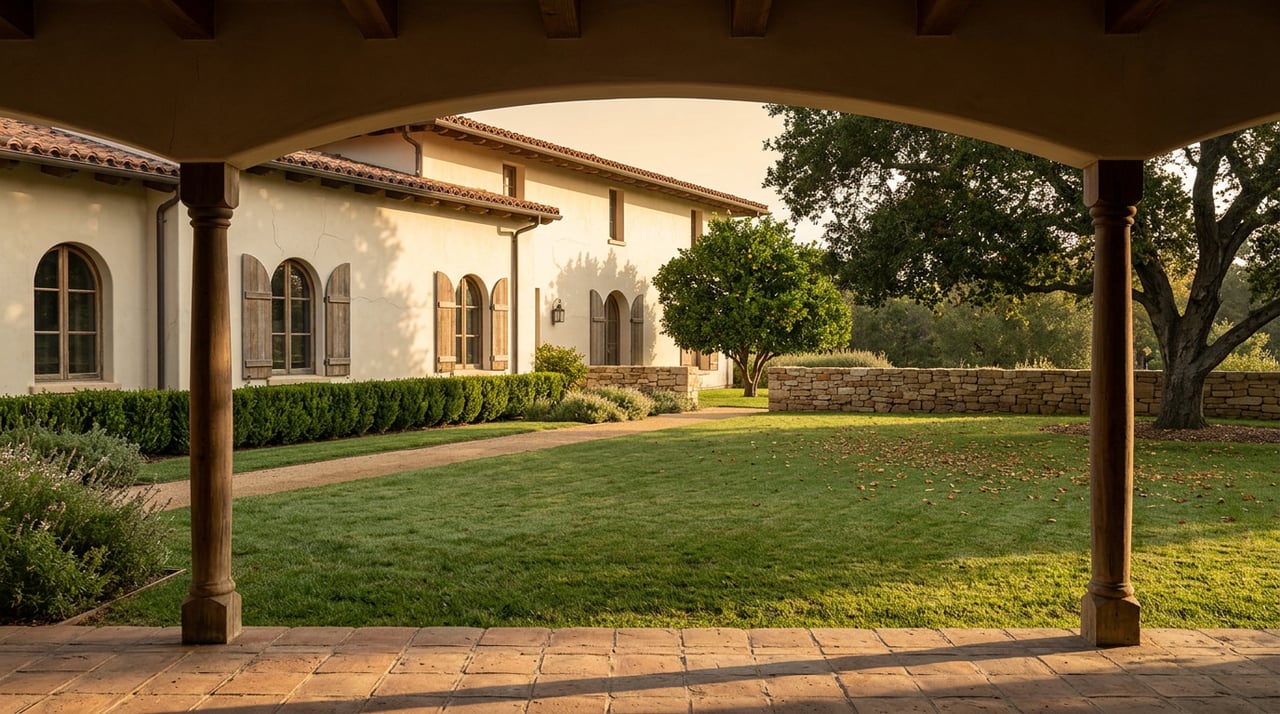
The Upland Homes Where Water Rights Are Part of the Deal, Not the Deed
In November 2023, a six-bedroom home built in the 1890s went on the market on East 13th Street in Upland, asking $1.9 million. Months earlier, a 1931 mansion on North Euclid Avenue had closed at $3.2 million. Both properties carried something almost no other home in the city has: a direct account with the San Antonio Water Company, the private mutual utility that has served this stretch of the foothills since 1882. Neither listing description could simply say "water included." The water itself was a separate asset, with its own transfer paperwork, sitting apart from the deed.
That distinction is the part most buyers, and more than a few agents, miss. In Upland and unincorporated San Antonio Heights just north of the city, a home's water supply is not always something the city hands over automatically when a sale closes. For a small number of legacy properties, water arrives through shares of stock in a 19th-century water company, and those shares have to be conveyed on their own track, with their own signatures, separate from the escrow paperwork everyone assumes covers everything.
The San Antonio Water Company was incorporated on October 25, 1882, as a mutual water company, meaning it exists to serve its shareholders rather than to turn a profit for outside investors. It draws from the San Antonio Canyon watershed and local groundwater basins at the base of Mount San Antonio, known locally as Mt. Baldy, and it does not import water from outside sources the way most Southern California utilities do.
Today the City of Upland owns roughly 68 percent of the company's outstanding shares, a stake it built up over decades as citrus groves gave way to subdivisions and orchard owners sold their land, and often their water shares along with it, to developers. Most Upland households never think about this company because the city folded the water it draws from SAWCo into the municipal system decades ago. But a small group of properties in San Antonio Heights and a handful of legacy estates inside city limits never made that switch. They still draw water directly from SAWCo through a private conveyance system that runs independently of the city's mains.
Two of those legacy properties happen to be well known local landmarks. The Cracker Jack Mansion at 1936 North Euclid Avenue was built in 1931 and takes its nickname from the Rueckheim family behind the popcorn snack, tracing back through decades of local ownership including the Berry family, whose patriarch served as Upland's mayor in the 1940s and later as a state assemblyman. The Nisbet Estate on East 13th Street once belonged to Eugene Nisbet, a longtime Upland city councilman and mayor who was later elected to the California State Senate. Both properties kept enough of their original grove acreage and landscaping intact that the water demand never dropped to city-sized levels, and both still carry that entitlement as shares rather than as a simple utility hookup.
When these two estates came onto the market within months of each other, it drew attention from Upland's own city hall. Local reporting at the time noted that Mayor Bill Velto had shown interest in acquiring the water shares tied to both properties, potentially separating the water rights from the homes before new owners took title. Whether that interest was pursued on the city's behalf or something else was never fully clarified publicly, but the episode illustrated something worth knowing before you write an offer on a property like this: the water shares are a negotiable asset, not a fixture that automatically follows the house.
Part of what makes these shares valuable is straightforward economics. According to figures reported in 2019, San Antonio Water Company delivered an acre-foot of water, enough to cover an acre one foot deep, for $296. The Metropolitan Water District, which supplies most of the rest of the region, charged $731 for the same volume untreated and $1,050 treated. That gap has made the roughly 1,300 San Antonio Heights homeowners who still hold SAWCo shares protective of what they have, and the San Antonio Heights Association has noted that per-share values have climbed well past the $500 to $900 range they once traded at.
None of this means a buyer should expect a discount on their water bill citywide. It means that for the specific pocket of properties still connected to SAWCo directly, the shares function less like a utility account and more like a private easement with real resale value, one that a seller can choose to keep, sell separately, or convey with the property.
Here is the part that catches people off guard. San Antonio Water Company is legally a private mutual water entity, and it requires any transfer of shares to be handled in writing, signed by the shareholder of record, and notarized. The company publishes its own Water Stock Transfer Instructions specifically for transfers that happen at, or separately from, close of escrow. A standard grant deed does not touch this. Title companies that don't regularly handle SAWCo properties can miss the step entirely, which means a buyer can close on a home believing water rights came with it, only to find the shares were never formally reassigned.
The company is also strict about who can hold or use shares at all. Leasing water stock is a privilege reserved for existing shareholders, meaning a non-shareholder buyer cannot simply lease access from the seller as a workaround. If shares aren't transferred through the proper notarized process before or at closing, the new owner may need to apply for water service through the standard city system instead, which changes both the cost and the character of what they thought they were buying.
A home can change hands cleanly while its water entitlement stays behind, unless someone files the separate paperwork to move both at once.
For most Upland buyers and sellers, none of this applies. The overwhelming majority of homes in the city draw water through the standard municipal system, and a typical purchase agreement covers everything a buyer needs. But if you're looking at a property in San Antonio Heights, or an older estate near North Euclid or the base of the foothills that predates most of the city's postwar subdivisions, it's worth asking directly whether the parcel carries SAWCo shares.
This matters most for the transactions where nobody involved is thinking about water rights at all: an executor settling an estate who inherited a home along with shares they didn't know existed, a family selling a longtime relative's property who assumes the water "just comes with the house," or a buyer whose lender and title company have never handled a mutual water company transfer before. In each case, identifying the shares early, confirming who holds them, and starting the notarized transfer process well ahead of closing prevents a surprise that can otherwise surface during the final week of escrow.
Does this affect most Upland homes? No. It applies to a narrow group of properties in unincorporated San Antonio Heights and a handful of legacy estates inside city limits that never converted to the municipal water system. Most Upland addresses are unaffected.
How do I find out if a property has water shares? The seller or their agent should be able to confirm whether the parcel carries San Antonio Water Company stock, and the company itself can verify shareholder status for a specific address.
What happens if the shares aren't transferred at closing? The new owner may not have access to the private conveyance system and could need to apply for standard city water service instead, which is a different cost structure and a separate process to set up.
Can a buyer lease water access instead of taking shares? Only if the buyer is already a SAWCo shareholder. The company does not permit leasing to non-shareholders.
Water shares tied to a handful of Upland's oldest estates are a reminder that not every asset attached to a property shows up on a standard title report. For families managing an inheritance, executors settling a trust, or buyers drawn to one of the foothill area's historic homes, confirming what's actually included, and making sure it transfers the right way, is the kind of detail that separates a clean closing from a complicated one.
If you're weighing a purchase or sale involving a legacy Upland or San Antonio Heights property, or managing a transaction on behalf of an estate, Cornerstone Realty Group can help you sort out what's actually part of the deal. Get in touch for a free home valuation and a personalized plan.


Navigating the journey of buying or selling a home can be a breeze when you've got the right expert by your side. We're here to simplify the process for you, tackling all your questions with honesty and dedication. Even if we don’t have an immediate answer, we promise to find it for you. Let's make your real estate experience smooth and stress-free together!
299 W FOOTHILL BLVD STE 212 UPLAND CA 91786 Yolanda Andrade | CA DRE# 01748163