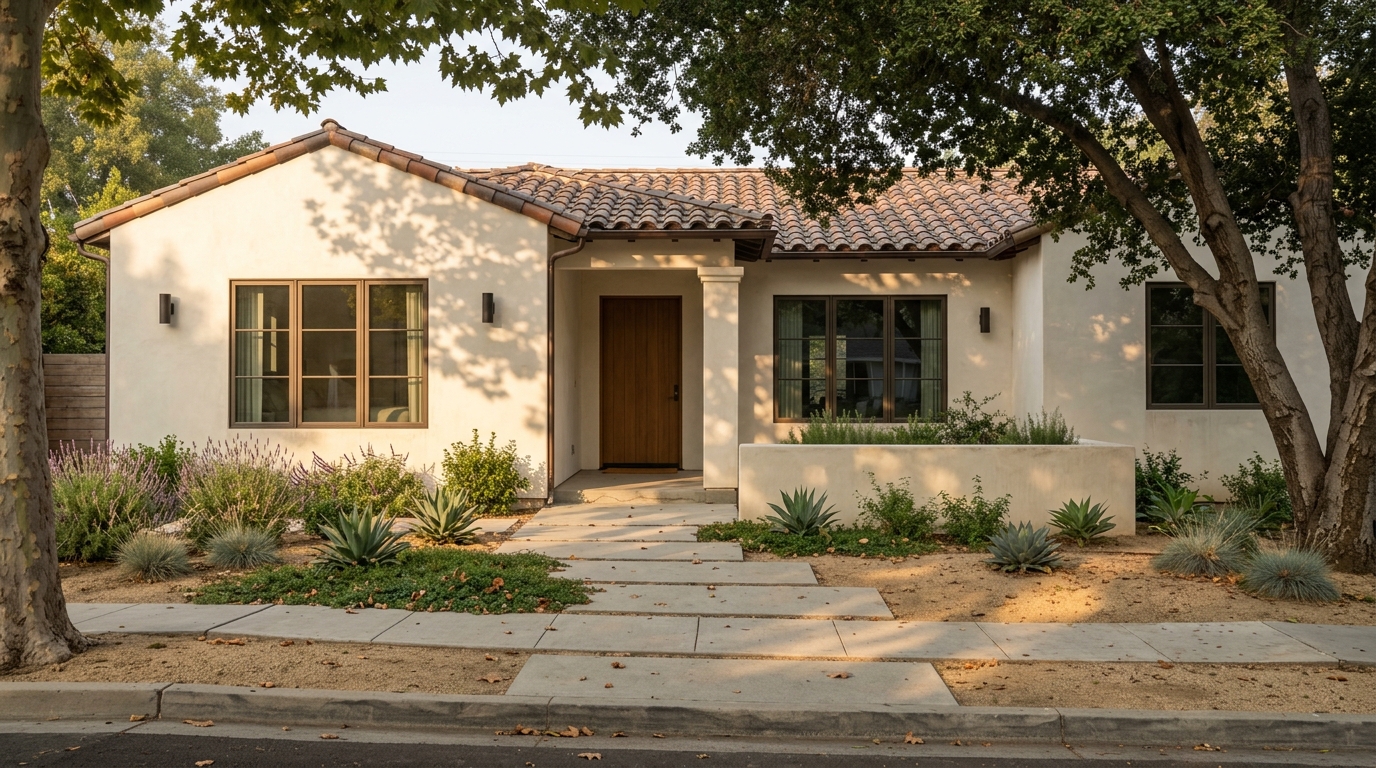
Living Near The Claremont Colleges
If you are thinking about living near The Claremont Colleges, you are probably wondering what daily life really feels like once the campus tour glow wears off. You want more than a map pin near school buildings. You want to know how the area moves, what housing actually costs, and whether the lifestyle fits your routine. This guide will help you understand what to expect around the colleges in Claremont and how to think through your options with confidence. Let’s dive in.
Claremont has a distinct identity that blends a small-city feel with a strong academic presence. The city has 35,640 residents and 7 educational institutions, and it describes itself as a place with tree-lined streets, a small-town atmosphere, and civic life closely tied to the colleges.
The Claremont Colleges consortium includes seven independent institutions on contiguous campuses and serves more than 8,000 students and 3,400 faculty and staff. That scale shapes the local housing market, daily rhythms, and the overall feel of nearby neighborhoods. If you live close by, campus life is not just in the background. It is part of the pulse of the area.
Living near the colleges often means being close to activity that goes beyond class schedules. The consortium calendar includes exhibitions, lectures, performances, museum programming, and larger events at venues like Bridges Auditorium. Many of these offerings are open to the public, which adds to the area’s appeal if you enjoy easy access to arts and cultural events.
At the same time, Claremont still presents itself as a city with a small-town atmosphere. You may find that balance appealing if you want a walkable core with regular community activity, but not the scale of a much larger urban center. For many buyers and renters, that mix is the main draw.
One of the most important things to know is that Claremont is not a one-size-fits-all housing market. The city offers single-family homes, condominiums, townhouses, and apartments, giving you several ways to live near the colleges depending on your budget, space needs, and long-term plans.
Census data shows that 63.2% of housing units in Claremont are owner-occupied. That tells you the city has a strong ownership base, even with the colleges playing such a major role in local life. If you are deciding whether to rent or buy, it helps to know you are comparing options in a market where both paths are common.
Claremont is a high-priced and competitive ownership market. Redfin reported a median sale price of $1,091,500 in March 2026, with homes spending about 36 days on market. Zillow’s typical Claremont home value was $1,039,337 as of March 31, 2026.
Those figures come from different methods, so they should not be treated as identical. Still, they point in the same direction: demand remains strong, and buyers often need to be ready to act when the right property becomes available.
The Census Bureau places the median value of owner-occupied housing at $897,000. That number offers a useful broader benchmark, while current market data gives you a closer look at recent pricing conditions.
Near-campus housing does not sit in one price band. Neighborhood-level Zillow estimates show how much values can change within Claremont:
The key takeaway is simple: exact location and property type matter. Two homes that are both considered "near the colleges" may have very different price points based on the block, the style of housing, and the surrounding setting.
If you are not ready to buy, Claremont also offers a range of rental options. Apartments.com reported an average apartment rent of $1,825 per month in May 2026. Typical one-bedroom apartments were also listed at $1,825, while two-bedroom units averaged $2,249 and three-bedroom units averaged $2,909.
Larger housing types usually cost more. The same source reported average rents of about $4,064 for houses, $3,450 for condos, and $3,607 for townhomes. If you want more space or a different layout, that price jump is worth planning for early.
Your decision often comes down to budget, timeline, and lifestyle. Renting can give you flexibility if you are relocating, trying out the area, or not yet ready for a purchase in a competitive market. Buying may make more sense if you want to put down roots and can move quickly when inventory matches your goals.
Because pricing varies so much by property type and location, a side-by-side review of your monthly cost scenarios can be helpful. Looking only at citywide averages may not tell the full story for the area you actually want.
The core around the Village and the colleges is the most pedestrian-oriented part of Claremont. The city says the historic Train Depot serves as both a Metrolink stop and a Foothill Transit bus stop, and it is within walking distance of the Village shopping district. The station lot also offers free parking.
Claremont has also said its active transportation planning aims to make the city more walkable, bikeable, and transit-oriented. If you value the ability to leave your car parked and walk to dining, shops, campus events, or transit, the area near the colleges is likely to feel more convenient than car-dependent parts of the region.
Parking can be a bigger issue than many people expect when they first look near campus. In the Village, the city provides three-hour parking in six lots, two-hour on-street parking near storefronts, and some all-day public lots. That mix can be useful for errands and dining, but it also means you need to understand where longer stays are allowed.
For overnight street parking, Claremont prohibits parking on city streets for more than one hour between 2 a.m. and 6 a.m., although exemptions are available. If you are choosing between properties with and without dedicated parking, this rule can have a real effect on convenience.
Parking also matters for students and some staff. The city says students who live on campus and have vehicles can get free parking in the TCT/South lot, while students living off campus in Claremont must use resident parking. Faculty are only eligible for free parking if they are Claremont residents.
Many people love the energy near The Claremont Colleges, but it is smart to go in with clear expectations. Claremont regulates residential noise, with moderate standards between 7 a.m. and 10 p.m. and stricter standards overnight. The city also sets limits on property-maintenance noise and construction hours.
That does not mean the area is silent. Homes closest to performance venues or student-heavy corridors may notice occasional event-related activity. If quiet is a top priority for you, block-by-block location can make a meaningful difference.
For buyers thinking beyond the next year or two, Claremont has planned housing growth on the horizon. The city’s Housing Element says Claremont must plan for 1,711 new housing units by 2029. That points to continued change in the local housing landscape.
The Village South Specific Plan also emphasizes transit-oriented development, mixed uses, walkable blocks, pedestrian-oriented frontages, and continuity of Village character. In practical terms, that suggests more infill and potentially more housing choice near the core over time.
This does not guarantee lower prices or easier competition. Redfin still describes Claremont as a very competitive market, with homes receiving about two offers on average and selling in roughly 36 days. But it does mean buyers and sellers should pay attention to how location near the Village and colleges may continue to evolve.
Living near The Claremont Colleges tends to work well for people who want a college-town setting with a walkable historic core and regular access to public lectures, concerts, museums, and community activity. It can also appeal to those who want transit access and the option to live near campus in anything from an apartment to a single-family home.
You may feel especially comfortable here if you like an active environment and do not mind some parking rules or occasional event traffic. If your priority is a more tucked-away setting with fewer moving parts, you may want to compare different parts of Claremont carefully before deciding.
The best move usually starts with narrowing down your non-negotiables. Think about how much walkability matters to you, whether you need dedicated parking, and how flexible you are on home type. A condo near the Village may offer a very different lifestyle than a larger single-family home farther from the campus edge.
It also helps to define your timeline and monthly comfort zone early. In a market where values and rents can vary sharply by area, having a clear plan makes it easier to act with confidence instead of reacting under pressure.
Whether you are buying your first Claremont home, relocating closer to work, or making a life-event move that needs extra care, local guidance matters. At Cornerstone Realty Group, you can get a free home valuation and a personalized plan built around your goals.

Navigating the journey of buying or selling a home can be a breeze when you've got the right expert by your side. We're here to simplify the process for you, tackling all your questions with honesty and dedication. Even if we don’t have an immediate answer, we promise to find it for you. Let's make your real estate experience smooth and stress-free together!

299 W FOOTHILL BLVD STE 212 UPLAND CA 91786 Yolanda Andrade | CA DRE# 01748163